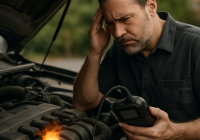
ABS and Traction Control Lights On? What It Means, Common Causes and What to Do
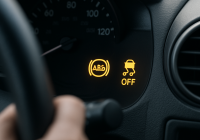
When the ABS light and traction control light come on together and remain illuminated, the vehicle has commonly detected a condition that has made one or both of those automated safety functions unavailable or limited. A shared wheel-speed signal, wiring fault, electrical issue or control-system input can trigger both warnings. The lights do not, however,… Read More: ABS and Traction Control Lights On? What It Means, Common… »
Chevy Equinox Check Engine Light: Meaning, Causes, Codes and What to Do

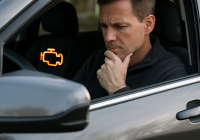
A check engine light on a Chevy Equinox means its onboard diagnostic system has detected a fault in an engine, emissions, powertrain-related, or electronic-control system and stored a diagnostic trouble code (DTC). It is a warning system, not a diagnosis: the lamp alone cannot identify the failed part. The useful next step is to read… Read More: Chevy Equinox Check Engine Light: Meaning, Causes, Codes and What… »

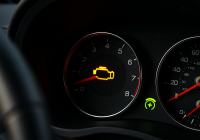
Subaru Check Engine Light and Flashing Cruise Control: Meaning, Causes and What to Do

If your Subaru has a check engine light and a flashing cruise-control indicator, it generally means the engine-management system has recorded an engine- or emissions-related fault and cruise control has been disabled in response. It does not, by itself, prove that the cruise-control hardware has failed. The first priority is to determine whether the check… Read More: Subaru Check Engine Light and Flashing Cruise Control: Meaning, Causes… »

Chrysler Pacifica Interior Lights Won’t Turn Off: What to Check First and When to Get Help

If your Chrysler Pacifica interior lights will not turn off, do not immediately assume that a bulb, fuse, door switch, or control module has failed. “Interior lights” can mean overhead lamps, map lamps, cargo-area lamps, ambient lighting, instrument-panel illumination, or even other systems that remain active after shutdown. The supplied evidence does not include the… Read More: Chrysler Pacifica Interior Lights Won’t Turn Off: What to Check… »

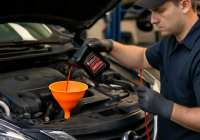
Nissan Altima Transmission Fluid Change: What to Verify Before Service

A Nissan Altima transmission fluid change should not be booked, performed, or priced as a one-size-fits-all job. Before any fluid is added or replaced, confirm the vehicle’s model year, engine, exact transmission application, and Nissan-specified fluid requirement in the applicable owner documentation or factory service information. That verification matters because a generic “transmission service” quote,… Read More: Nissan Altima Transmission Fluid Change: What to Verify Before Service »

Steering Wheel Shakes When Braking at High Speeds: Causes, Checks and Fixes

If your steering wheel shakes when braking at high speeds, the first area to inspect is usually the front brake system—particularly the brake rotors (also called discs), pads and caliper movement. An uneven braking surface or uneven braking force can create a pulse that travels through the pedal, steering gear and steering wheel. However, the… Read More: Steering Wheel Shakes When Braking at High Speeds: Causes, Checks… »

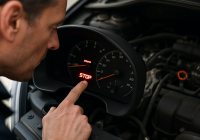
Oil Pressure Low—Stop Engine: What It Means, What to Do, and Common Causes

An “Oil Pressure Low—Stop Engine” message is an oil-pressure warning, not simply a routine oil-change reminder. It can mean the engine is not receiving sufficient lubrication pressure, although a faulty sensor, switch, or wiring circuit can also produce an inaccurate warning. Treat it as urgent until the cause has been established: pull over safely as… Read More: Oil Pressure Low—Stop Engine: What It Means, What to Do,… »

P0300 Random/Multiple Cylinder Misfire Detected: Meaning, Causes, Symptoms and What to Do

P0300 means the vehicle’s computer has detected a random or multiple-cylinder misfire. In plain English, one or more combustion events are not contributing normally, but the code does not identify a failed part by itself. Worn spark plugs, an intake-air leak, an air/fuel-mixture problem and damaged wiring are among the possible causes. Record any other… Read More: P0300 Random/Multiple Cylinder Misfire Detected: Meaning, Causes, Symptoms and What… »